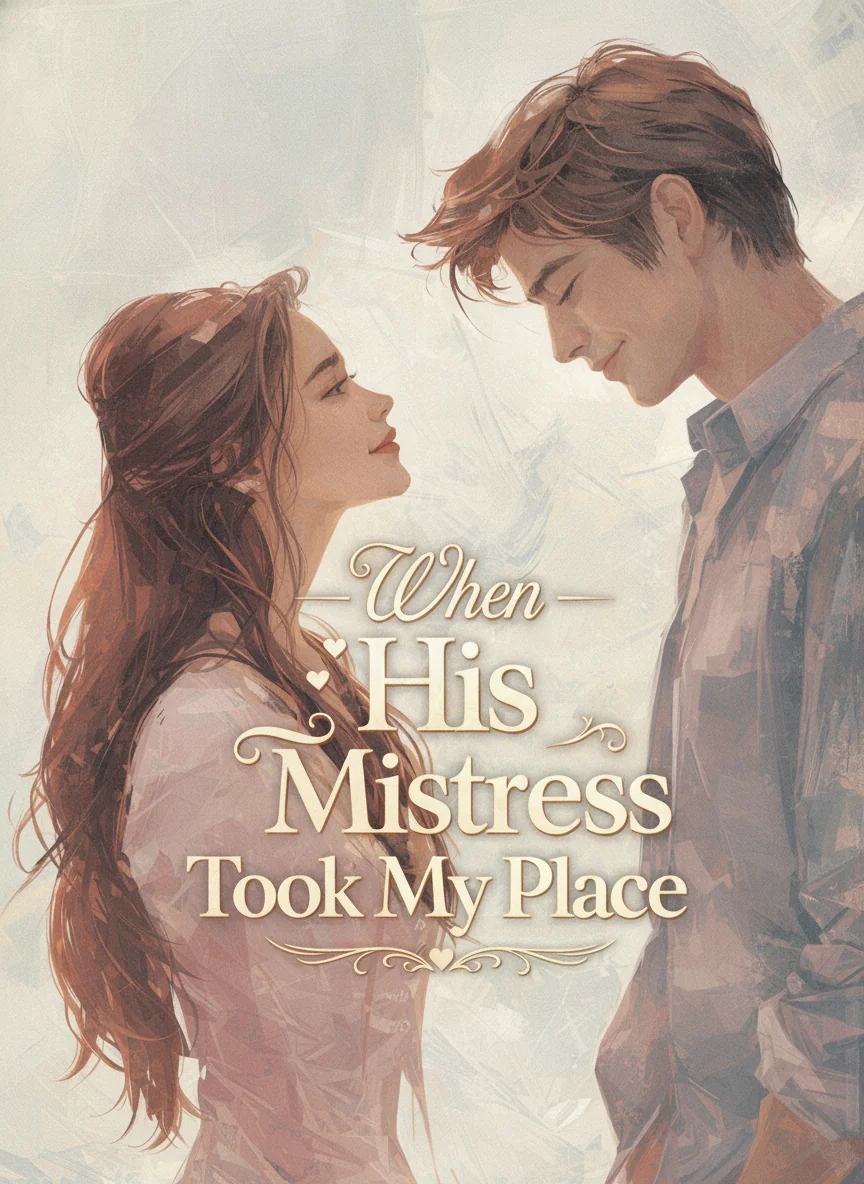
When His Mistress Took My Place
Chapter 2
I drove out early, before the city fully woke up.
The Long Island Expressway was thin and gray in the morning light. I kept both hands on the wheel and the radio off. There was nothing I wanted to hear. There was nothing I needed to think about, either—I had done all the thinking in the guest room, in the dark, with an empty velvet box pressed against my chest.
I already knew what I was going to say. I had known since the ceiling turned gray.
Roger's estate sat at the end of a long gravel drive, behind a row of old oaks that had probably been there since before anyone in the Ross family was born. The house was white clapboard, wide-porched, modest in the way that only very old money could afford to be modest. I parked and sat in the car for a moment. The ocean was somewhere behind the house. I could smell it.
I rang the bell.
Roger opened the door himself. He was in a wool cardigan, reading glasses pushed up on his forehead. He looked at my face and whatever he saw there made him step back without a word and hold the door open.
"Come in," he said quietly.
His study smelled like wood and old paper. A fire was going even though it was morning. He poured tea from a pot on the sideboard—chamomile, pale gold—and set it on the table in front of me. I wrapped my hands around the cup and didn't drink.
He settled into the chair across from me and waited.
"I want a divorce," I said.
I said it the way I would have said anything factual. The room temperature. The distance from here to the city. Roger's face moved—something crossed it that I couldn't fully name, some slow tide of expression that passed through grief and landed somewhere closer to shame.
He didn't argue. He didn't ask me if I was sure.
"There's one more thing," I said. "I'm going to make a final capital injection into Ross Enterprises before I go. Not for Sebastian." I paused. "For you. Because you built something real, and you don't deserve to watch it collapse because of him."
Roger looked at his hands for a long moment. His knuckles were large and weathered, the hands of a man who had built things with them long before he had people to build things for him.
"Estelle," he said. Then stopped.
He got up. He went to his desk—the big oak one under the window, the one stacked with folders and a single framed photograph I couldn't see from where I sat. He opened the top drawer and took out a legal pad and a pen. He sat down and began to write.
I watched him. His handwriting was slow and deliberate. He paused twice to think, then kept going. The fire crackled. Outside the window, the oaks moved in a light wind.
It took him twenty minutes. When he was done, he read it back through twice, made one small correction, and set it on the desk. Then he came back to his chair and sat down and looked at me.
"Fair terms," he said. "Full rights to your personal property. Everything that was yours before you walked into that apartment stays yours." He held my gaze. "I'll have my lawyer formalize it today."
"Thank you," I said.
He leaned forward then. He reached across the low table between us and took both my hands in his. His grip was dry and very steady.
"You deserved better," he said, "than what my blood gave you."
His voice was even, but something in it wasn't. Something in it had been sitting a long time, waiting for a moment it was too late to be useful.
"I should have said it sooner," he continued. "I should have done more."
I looked at him. His eyes were red at the rims. He was seventy-eight years old and he was looking at me like a man accounting for something he couldn't pay back.
I squeezed his hands once.
"You're saying it now," I said.
I stood up. I picked up my coat from the arm of the chair. He walked me to the door—slowly, because his hip was bad and he never mentioned it—and held it open while I stepped onto the porch.
The gravel crunched under my shoes. The oaks moved again. I got in the car, started the engine, and pulled down the long drive without looking in the rearview mirror.
But I knew he was there. Standing in the doorway, watching my taillights until the drive curved and I disappeared behind the trees.
I drove back toward the city. Both hands on the wheel. Radio off.
The empty velvet box was in my coat pocket. I could feel its small, square weight against my ribs the whole way home.
You may also like