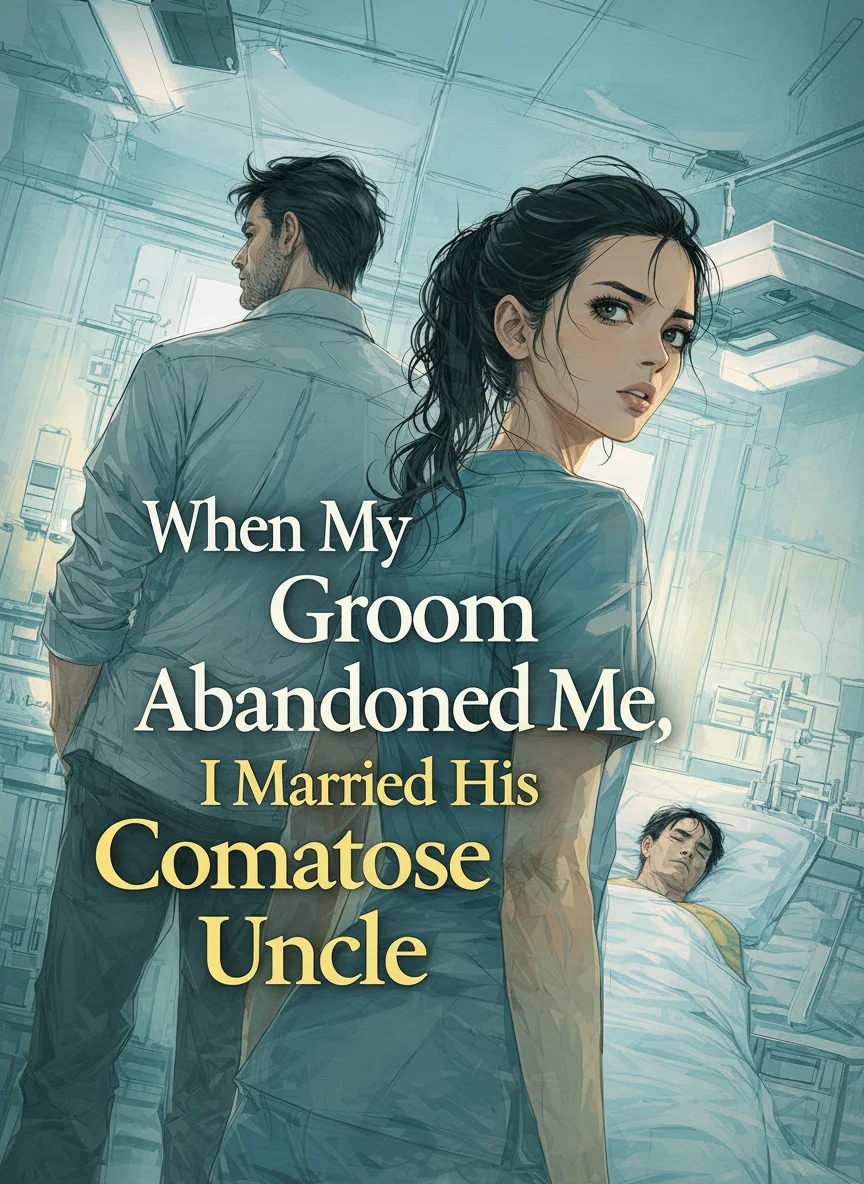
When My Groom Abandoned Me, I Married His Comatose Uncle
Chapter 3
On Monday morning, my keycard flashed red.
*Beep.* Access denied.
I swiped it again. The little red light glared back at me.
The security guard at the desk gave me an apologetic shrug. "System says you’re classified as non-affiliated personnel, Dr. Sanders. Your access to the neuroimaging suite has been revoked."
Dominick. It was his signature move. Stone Medical held two seats on Mount Sinai’s executive board. With a single phone call, he had cut me off from the scanners I needed to map Declan’s brain.
For two days, I fought a wall of bureaucracy. Administrative assistants gave me blank stares. My urgent appeal forms sat in review queues, untouched. Every minute lost was a minute Declan slipped further away.
Then, on Wednesday afternoon, my office door swung open.
Dr. Elena Vasquez stepped inside. She was the Chief of Neurology, a woman with sharp dark eyes and silver-streaked hair. She didn't bother with small talk. She dropped a white plastic card onto my desk with a sharp *clack*.
It had my photo on it, along with a gold master-clearance strip.
"I’ve read your published papers on deep cortical stimulation," Dr. Vasquez said, crossing her arms. "They’re brilliant."
I looked up at her, surprised. "The Stone family sits on the board. If Dominick finds out—"
"Dominick Stone is an arrogant boy playing with his grandfather's money," she cut in, her voice crisp. "He doesn't run my department. You do the real work, Dr. Sanders. Use the imaging suites after hours. I’ll make sure the board looks the other way."
Having access was one victory. Keeping my supplies was another.
By Thursday, my equipment orders started vanishing. A shipment of specialized micro-electrode arrays was suddenly "rerouted" to a storage facility in New Jersey. Two vials of experimental neural peptides were marked "lost in transit."
I checked the delivery logs. The signatures were forged.
Dominick wanted to starve my project. He wanted me to give up, pack my bags, and crawl back to beg for that two percent equity.
I didn't yell. I didn't break things. I just sat at my desk and got to work.
For three sleepless nights, I lived on cold coffee and stale protein bars. I burned through every professional favor I had earned over the last ten years. I called my old residency mentor at Johns Hopkins. I reached out to a neuropharmacology fellow I knew at the Cleveland Clinic.
"Belen," my mentor said over the line at two in the morning. "These compounds are off-label and expensive."
"Bill my personal savings," I told him, not hesitating for a second. "Just ship them under private courier. Don't use the hospital loading dock."
By Saturday night, the boxes sat neatly stacked in the corner of Declan’s room. Every single obstacle Dominick put in front of me, I tore down.
But the exhaustion was catching up to me.
I caught my reflection in the dark window glass. Deep purple bruises shadowed the skin beneath my eyes. My shoulders were tight with tension. Without realizing it, my right thumb started rubbing the back of my left hand. Round and round in small, frantic circles. It was a nervous habit I’d had since childhood, something I did whenever the world felt too heavy to carry.
I finished a grueling sixteen-hour calibration session on Declan’s neural stimulator. My fingers were stiff, my lower back burning.
I kicked off my clogs and dropped into the vinyl armchair beside Declan’s bed.
The room was completely quiet. Outside, a gentle rain tapped against the glass. The only sound in the room was the soft, rhythmic hum of the monitors.
I looked at him. Even after three years of silence, his face had a quiet strength. High cheekbones. Dark, thick lashes resting motionless against pale skin.
I leaned my head back against the wall. I didn't want to talk about voltage, synapses, or brain waves tonight. I was simply too empty.
"I threw the dress away," I said softly to the ceiling.
My voice sounded small and raw.
"The ivory dress I wore to the courthouse. I tossed it straight into the incinerator chute. I spent three months picking it out. I thought I looked pretty in it."
A bitter, dry laugh slipped out of my throat.
"Five years, Declan. I managed his calendar. I edited his surgical papers. I smiled at boring dinners and excused his bad temper. And he threw me away with a single text message."
I looked down at the back of my hand. My skin was red where my thumb kept rubbing.
"When I was nine, my mother died," I whispered. "She had a degenerative neurological disease. A rare one. The hospital didn't care. They told my dad it wasn't profitable to research. She faded away in a crowded ward, hooked up to cheap machines."
My chest tightened. The old ache flared up, sharp and familiar.
"I spent my entire life trying to be the best. I thought if I became brilliant enough, useful enough, nobody could ever discard me. But Dominick did. Your whole family did."
I leaned forward. The cold air of the room brushed my skin. I reached out and let my forehead rest against the cool metal of the bedrail, right next to his still hand.
"They think you're nothing," I whispered, my voice trembling. "They think you're just an empty shell taking up space. But I see you. I won't let them throw you away. I won't let you die alone."
A sudden sound shattered the quiet.
*Beep. Beep. Beep.*
The neural monitor on the stand behind me began to chime rapidly.
I sat up, startled, but the display wasn't sounding an alarm. It was recording data.
A sharp, electric spike tore across the black screen. The brainwave lines surged—climbing from three microvolts straight to twenty-five. A powerful, sustained burst of high-frequency gamma activity lit up the entire panel.
It was the highest reading his brain had produced in three long years.
I rubbed my tired eyes, staring in disbelief at the glowing graph.
Beside me on the white sheet, Declan lay as motionless as ever. But deep beneath the locked doors of his mind, the darkness was breaking.
He had heard every single word.
You may also like