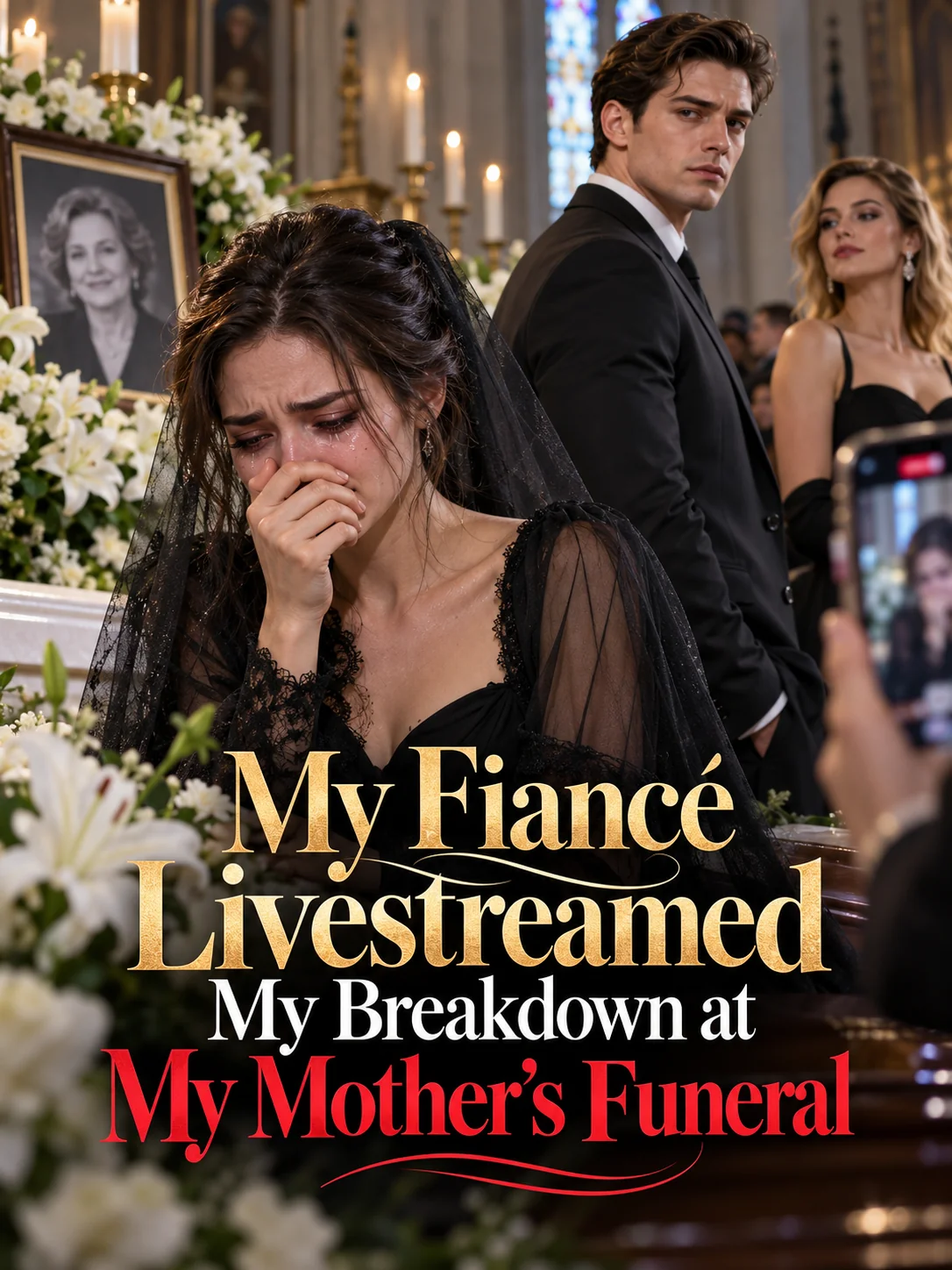
My Fiancé Livestreamed My Breakdown at My Mother's Funeral
Chapter 3
The conference room on the eleventh floor of Brightline smelled like dry-erase markers and someone's leftover pad thai. Marissa Pratt from HR sat across from me with a folder squared perfectly in front of her. Dana wasn't there. Neither was anyone else I'd worked with for six years.
"I'll keep this brief," Marissa said. "Three of our major clients have requested that you be permanently removed from their accounts. Given the circumstances, we are terminating your employment effective today."
She slid the termination notice across the table. My name was printed at the top, spelled correctly, which somehow felt worse.
"Is that a review?" I asked. "The email said there'd be a review."
"Leadership felt it wasn't necessary."
I wanted to argue. I wanted to tell her about the shelf, the glass, Victoria's palm flat against my mother's frame. But I knew how that would sound in this room, and I knew exactly how it would sound in her notes afterward.
"Please send every allegation against me to my attorney," I said. "In writing. Including the complaints from Victoria Lane and Brandon Hale."
Marissa's pen paused. "Mr. Hale didn't file anything formally."
"Then put that in writing too."
I unclipped my employee badge and set it on top of the notice. She didn't thank me.
Outside, Seventh Avenue was loud and gray. Across the street, the giant screen over the shopping center flickered from a perfume ad to a slow-motion video of Victoria handing a teddy bear to a child in a hospital bed. *Bright Hearts Foundation. Because Every Family Deserves Care.*
The sponsor list scrolled up beneath her smile.
*In Loving Memory of Linda Carver.*
My mother's name. Under Victoria's logo.
I stood on the sidewalk while people shouldered past me, and the whole city suddenly felt like a room with no windows. I couldn't stay here. Not one more night.
In my car, I pulled Mom's wool scarf off the passenger seat and pressed it to my face. It still smelled like her lavender lotion. When I lowered it, an old photo slipped from the glove box where I'd tucked it weeks ago: Mom at nineteen, barefoot on a wooden dock, a red boathouse behind her and a wide blue lake stretching out to the trees. On the back, in her looping handwriting: *Crane Hollow. Home.*
I started the engine.
---
Somewhere past the Tappan Zee, I called the number on the card Rachel Ostrowski had emailed me an hour earlier. *Claire Morgan, Estate & Trust Counsel.* Rachel had said it plainly: *This is bigger than a will. You need Claire.*
Claire picked up on the second ring. Her voice was brisk but warm.
"Erin. Rachel filled me in. First, I'm sorry about your mother."
"Thank you." I gripped the wheel. "I need to know what Brandon can touch."
"Okay. Your mother set up a revocable trust about five years ago. It became irrevocable when she passed, and it's still fully valid. There are company shares held inside it, plus a lakefront property in Crane Hollow. You're the successor beneficiary and the named successor trustee. We'll need to file the succession paperwork, but the assets are protected."
I glanced at the photo propped against the dashboard. The red boathouse.
"Brandon texted me this morning," I said. "He said he still has access to her paperwork."
Claire was quiet for a beat. "Has he ever handled any of her documents?"
I opened my mouth to say no, and then I remembered.
Mom's second month in the hospital. Brandon showing up on a Sunday, which he never did, carrying coffee for both of us. He'd offered to organize her files so I wouldn't have to. I'd come back from the vending machine and found him bent over her blue trust folder, phone held flat above it, snapping pictures page by page.
*Just making digital copies,* he'd said. *In case anything gets lost.*
I'd hugged him in the hallway. I'd actually cried, because I thought he finally cared about her.
"He photographed it," I said. "All of it. Last spring."
"All right." Claire's tone sharpened. "Listen to me carefully. Your fiancé has no automatic right to your mother's estate. None. But people try things. If anyone sends you a document to sign, a release, a transfer, a power of attorney, anything with your name on a line, you don't sign it until I've read it."
"Then I don't want him touching a single page."
"He won't. I'll flag the trustee today." She paused. "Erin, where are you right now?"
A faded postcard was rubber-banded to the sun visor. Mom had kept it on our fridge for years: *Greetings from Crane Hollow Lake!*
"Going home," I said. "Hers, I mean."
---
It was almost dark when I reached Crane Hollow. Freezing rain ticked against the windshield, and the lake beyond the main road looked nothing like the photo. The wind was shoving it into long white ridges that slapped against the shore.
Every shop on the little main street was closed. I drove until the road ended at a gravel lot and an old dock.
The red boathouse was still there.
Its paint was faded to rust, but it was the same building, the same slanted roof. I got out with the photo in my hand and Mom's scarf around my neck and walked toward it without thinking.
The planks were glazed with a thin layer of ice. I didn't notice until my heel shot out from under me.
I hit the edge of the dock hip-first and kept sliding. My legs plunged into the water, and the cold was so total it didn't even feel like cold. It felt like being punched everywhere at once. I clawed at the wooden lip, but my palms were still bandaged from the funeral, and they slid right off the wet boards. The water dragged at my coat.
"Hey! Grab the ring!"
Something orange smacked the water beside me. A life ring, bobbing on a line.
I hooked one arm through it and looked up, gasping. On the shore at the top of the dock, under the single lamp, a man sat in a wheelchair. He had the rope wrapped once around a mooring post, the rest coiled in his lap.
"Grab the rope. Don't try to climb until your feet find the ladder," he called. "It's to your left. Two feet. Move with the ring."
I kicked. My legs barely answered. "My hands—they won't work. I don't feel them anymore."
"I know. Keep talking to me." He had his phone up now, his voice switching to something clipped. "Dale, it's me. North dock, someone's in the water. Bring the truck. Now." Then back to me, steady as a metronome. "What's your name?"
"Erin."
"Erin, your foot just hit something. That's the ladder. Stand on it."
It was. I found the rung with my toes, then another. The rough rope bit into my wrist where I'd wrapped it. Headlights swung across the lot, and two men in county jackets ran down the dock, boots slipping, and grabbed me under the arms. They hauled me up onto the planks like a wet sack.
I lay there shaking, staring at the black rims of his wheelchair a few feet away.
---
They sat me against the boathouse door under the overhang. One of the lake staff, Dale, checked my pupils and my fingers, which had turned a terrible shade of purple, and asked me what day it was.
"Thursday," I said. My teeth were chattering so hard it came out in pieces.
"She's okay," Dale told the man in the wheelchair. "No transport needed. Just get her warm, fast."
The man rolled closer, but not too close. He set a thick wool blanket on my knees, then placed a thermos cup of hot water on the bench beside me, right where my hand could reach it. He didn't tuck the blanket around me. He didn't touch me at all.
I pulled the blanket up with clumsy fingers. Then I realized what I was still clutching against my chest: Mom's photo, soaked through, her young face blurred at the edges.
I started crying. Not quietly.
He didn't ask why. He just waited, looking out at the water, until I could breathe again.
"I'm Noah," he said finally.
"Thank you, Noah." I wrapped both hands around the cup. The heat stung. "For the rope."
"The inn closed for the season two weeks ago," he said. "Nearest motel's forty minutes, and the road's icing up. I own a guesthouse on the east shore. Separate building. You'd have it to yourself."
I looked at him. Dark hair damp from the rain, a plain canvas jacket, eyes that didn't flinch away from my mess.
"You don't know me," I said. "Why would you trust a stranger?"
His gaze dropped to the ruined photo in my lap. He was quiet for a moment.
"You don't need trust right now," he said. "You need a door that locks from the inside." He held out a brass key on a leather tag. "The guesthouse has its own lock. You can decide everything else tomorrow."
I could have told him about Brandon. About the livestream, the money, the job, the folder. The words were right there.
I didn't say any of it.
I took the key. The metal was warm from his hand, and for the first time in months, I didn't explain my grief to anyone. I just held it.
Noah turned his chair toward the boathouse's side door. As he rolled over the threshold, the lamp caught the right armrest, and I saw it: a small black metal badge bolted there, worn so smooth from his thumb that it shone.
You may also like