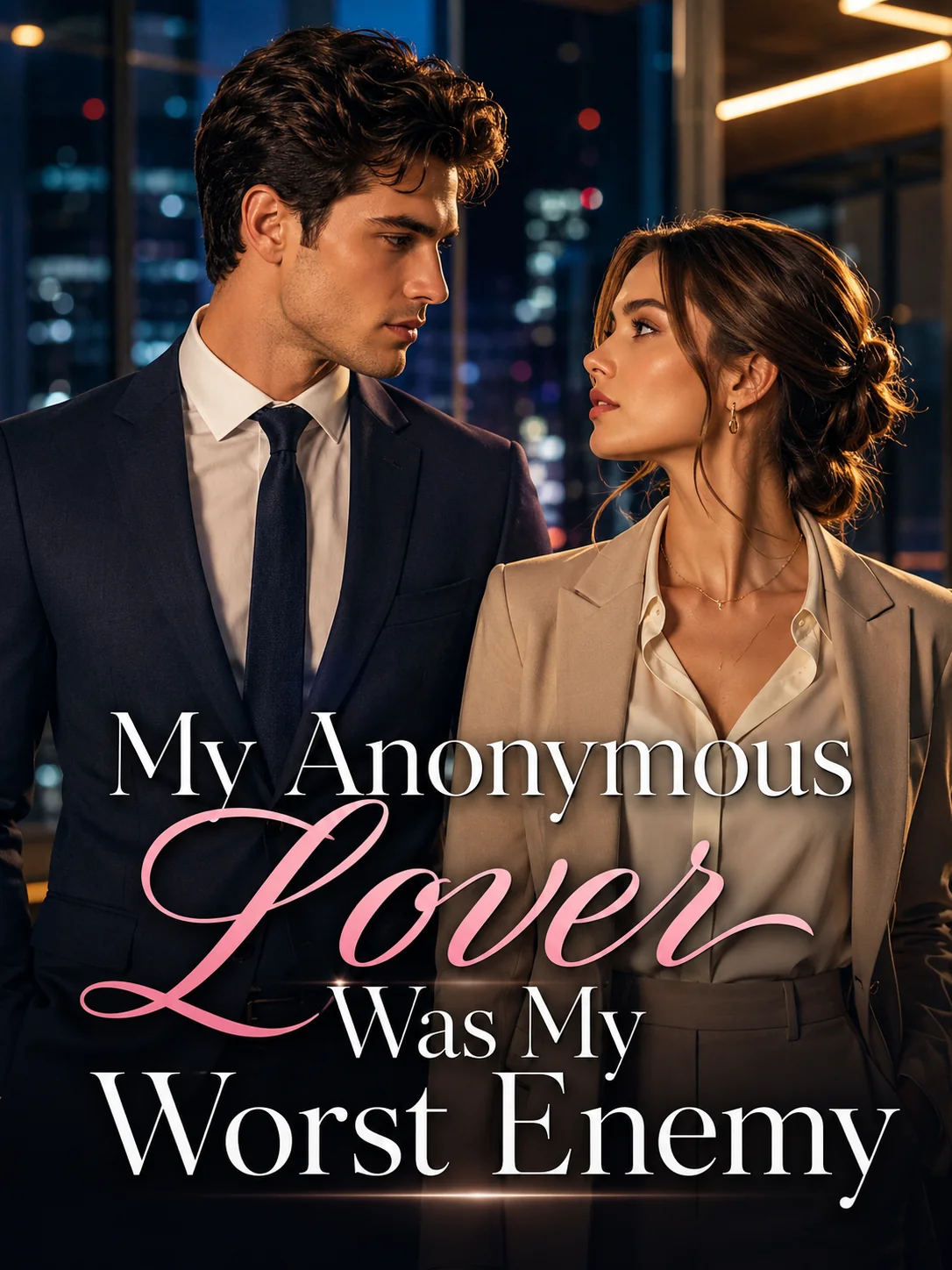
My Anonymous Lover Was My Worst Enemy
Chapter 1
At forty-one, I trusted fictional men more than the husband who used my private writing against me in our divorce.
Then I found a stranger’s note in the margin of a library romance.
He asked what kind of kiss would make a woman stop apologizing for wanting it.
I answered in plum-colored ink.
For seven weeks, we confessed everything between borrowed pages—where we wanted hands, when we needed restraint, and what it meant to be desired without being owned.
Last night, I finally wrote the fantasy I had never dared say aloud.
This morning, I walked into a library board meeting to defend my proposed book club on women’s desire.
Miles Rowan, the infuriatingly controlled board chairman who had opposed me for months, was waiting at the head of the table.
He placed our book in front of me.
It was open to page 287.
My fantasy stared up at me in my own handwriting.
Beneath it, a fresh line gleamed in dark blue ink.
Miles dismissed the board, locked the meeting-room door, and looked directly at me.
“You left one instruction unfinished, Iris.”
His finger rested beneath the most intimate sentence.
“Do you want me to tell you what I wrote back?”
**
"We are shelving the women's literature initiative indefinitely," Miles Rowan said.
I stared at the board president from across the mahogany table. "Shelving it? I submitted the full six-week proposal a month ago."
"Conservative donors have voiced concerns," he replied.
"Which donors?" I challenged.
"That is confidential."
"It's a convenient excuse."
"It is a reality of funding a community library, Iris."
"The themes are too provocative," I mocked. "Is that the official line?"
"The official line is that we need more time to review the material."
"You've had a month. I provided syllabi, reading lists, and guest speaker schedules."
"And all of them center on topics that alienate our core demographic."
"They center on female desire. We aren't hosting an orgy, Miles."
"It’s a risk we aren't taking."
"You mean it's a risk you aren't taking."
"I have to think about the library's funding."
"You have to think about controlling the narrative."
"I am managing a delicate budget."
"You are managing adult women."
My ex-husband, Grant, had used the same clinical tone eighteen months ago.
He had handed seven pages of my unpublished novel to his divorce attorney.
Grant twisted my fictional words to paint me as an emotionally unstable wife, unfit for a fair settlement.
I hadn't shown my writing to a single soul since.
Except for the anonymous reader in the margins of The Hours We Hide.
"Are you protecting the library, or are you just deciding which desires adult women are allowed to have?" I asked.
The other board members shifted in their seats.
Eleanor, the treasurer, cleared her throat. "Iris, no one is questioning the quality of your work. But six weeks is a significant commitment when our fall calendar is already full."
"Our fall calendar has three empty Thursday nights and a canceled author visit," I said. I opened the folder in front of me and pushed the attendance projections across the table. "Forty-eight patrons preregistered before we advertised publicly. Twenty-one volunteered to buy their own books. Tessa Cole offered her bookstore for the opening reception at no charge. This program costs less than the holiday wreath workshop you approved in twelve minutes."
Eleanor looked down at the figures. Two board members leaned closer. For one hopeful second, the numbers changed the temperature in the room.
I placed three patron letters beside the projections. One came from a widow who had not attended an evening event since her husband died. Another came from a college student asking whether the sessions would include queer writers. The third was unsigned and only two sentences long: I have spent forty years reading books in which women survive by wanting less. Please let us discuss one in which that is not the lesson.
"Those are members of our core demographic," I said. "They pay taxes, donate books, and walk through our doors every week. If a donor finds their questions embarrassing, the donor is the one alienating this community."
Miles closed the folder.
"The cost is not the issue," he said.
"Then put the real issue on the record."
His gaze held mine. "A donor tied future support to the program's cancellation."
"One donor?"
"A major one."
"And that person gets a private veto over what women read in a public building?"
Arthur Dunn shifted at the far end of the table. "No donor has a veto. The board is exercising discretion."
"Discretion would require a vote," I said. "I asked the board to vote tonight. Miles is trying to bury the proposal before any of you have to attach your names to the decision."
Silence spread around the table. Eleanor stopped touching the projections.
Miles's expression barely changed, but the muscle beside his mouth tightened. "You are an employee addressing the board, Iris."
"I am the adult-programming director addressing the people who hired me to build adult programming. If my proposal is rejected, I want the minutes to show who rejected it and why."
Arthur glanced toward Miles. "Perhaps we should table the matter until counsel reviews the donor agreement."
"That is still a delay," I said. "Registrations open Monday. My speakers need contracts. Every week you hide behind process makes cancellation easier."
I reached for my folder. A paperback slid from beneath Miles's leather portfolio and struck the table with a soft slap.
The Hours We Hide.
My breath caught. The library copy had a split at the bottom of its spine and a pale coffee ring across the back cover. I knew both marks. I had held that book in the locked third-floor reading room two nights earlier, adding a question in magenta ink beneath a stranger's dark blue reply.
Miles placed his palm over the cover.
"Why do you have that?" I asked.
"It was left on the scanning cart."
"No. I returned it to the third-floor shelf."
The other board members watched us now, the proposal forgotten.
I stepped around the corner of the table before Miles could move the book. It opened beneath his hand to page 287. Magenta sentences crowded the outer margin. Dark blue ink ran beneath them in the precise, controlled handwriting that had answered me for six weeks.
My private words lay exposed under the boardroom lights.
"Close it," I said.
Miles did, immediately.
That obedience frightened me more than an argument would have. He knew what the page contained. He knew why I could not bear to let anyone else see it.
"Where did you get the blue pen?" I asked.
His hand moved toward the inside pocket of his jacket, then stopped.
"Iris," Eleanor said carefully, "what is going on?"
I ignored her. "The note on page ninety-four said desire without choice is only another kind of prison. The note on page one hundred and six told me to stop apologizing for wanting more. Did you read those?"
"Yes," Miles said.
"Did you show them to anyone?"
"No."
"How do you know what was written on page 287?"
His eyes did not leave mine. The careful board president vanished for a heartbeat, and I saw the man who had challenged every argument I hid in those margins.
"Because I wrote back," he said.
You may also like