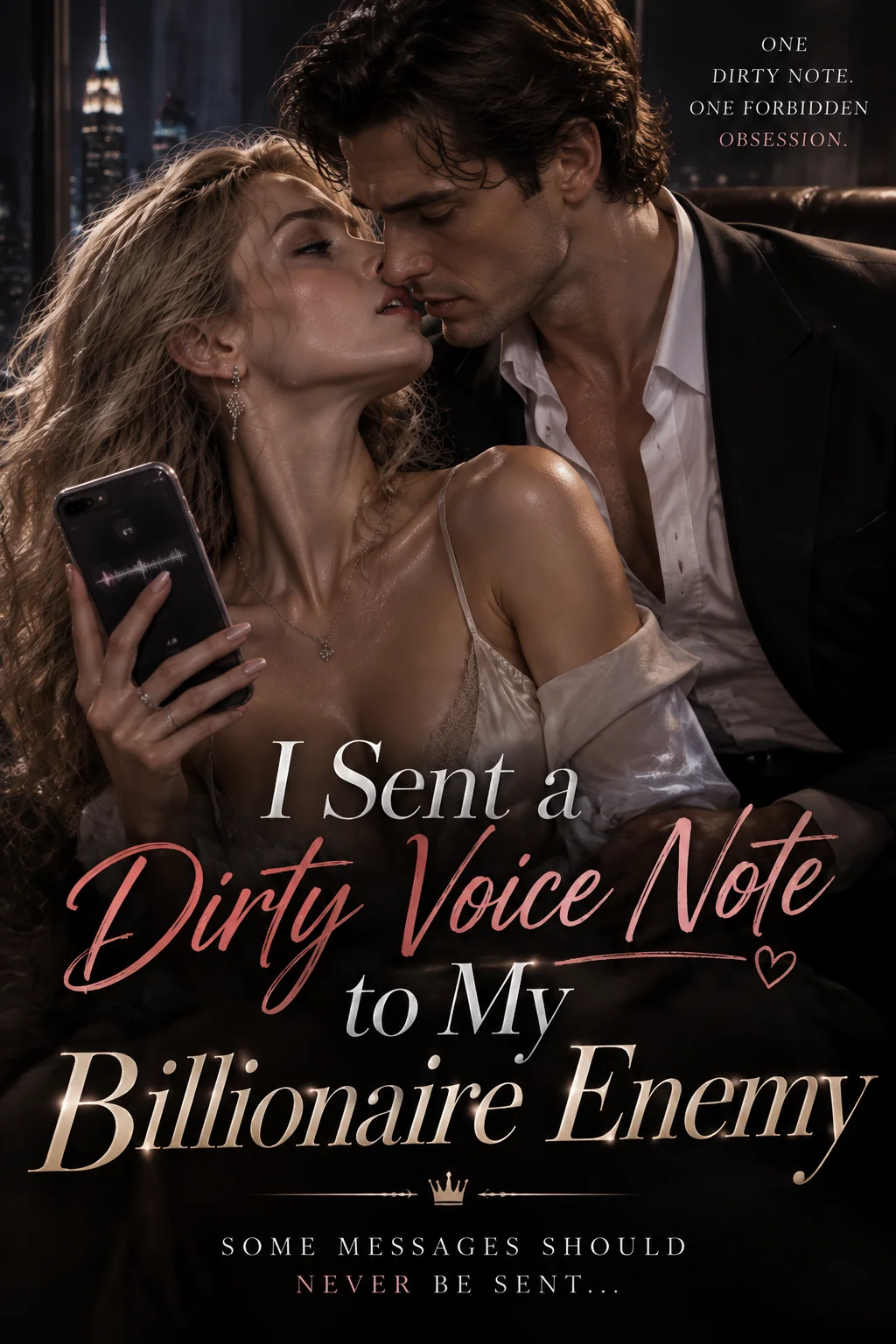
I Sent a Dirty Voice Note to My Billionaire Enemy
Chapter 4
"Thirty days." Caleb dropped the single sheet of paper onto my keyboard. It landed with a soft slap, covering my digital blueprints.
"What is this?" I asked.
I picked up the heavy cardstock. The bold black letters across the top read Preliminary Demolition Intent: The Oakhaven. The bottom line bore Caleb’s sharp, slashing signature. The ink was still fresh, slightly raised against the grain of the paper.
"You signed the order," I said, my voice thick with disbelief. "You actually signed it."
"The contractors are booked," Caleb said, adjusting his silver cufflinks. "They clear the site in exactly one month."
"We had an agreement," I argued, pushing my rolling chair back. "I had until Friday to present the revised preservation budget to the board."
"The board does not need to see another nostalgic fantasy," he replied, turning his back to me. "The decision is final."
He walked out of my cubicle. Three months of fighting him, three months of meticulous budget revisions, instantly erased by a single stroke of his pen. A hot, sharp wave of anger rushed into my chest, burning away any remaining professional restraint.
I snatched the document and marched after him. My flat shoes slapped against the carpeted floor of the bullpen. Several junior designers looked up from their monitors, but I ignored them.
Caleb didn't even make it to his desk before I pushed through his glass office door.
"You bypassed the preservation committee entirely!" I yelled, hurling the stiff paper directly at his chest.
Caleb did not flinch. His right hand snapped up. He caught the document mid-air. The white bandage on his index finger flashed under the recessed lighting.
"Close the door, Harper," he ordered.
"No," I shot back, stepping further into his space. "You lied to the partners. You told David we had until the end of the quarter to review the masonry costs."
"I made an executive decision," he said. He tossed the paper onto his polished mahogany desk. It slid across the wood and stopped against a stack of unread emails. "The masonry costs were a dead end."
"They were fully funded!" I pointed at the discarded paper. "The Landmarks Commission guaranteed the tax credits. I handed you the approval letters myself."
"Tax credits do not cover the structural liabilities of a hundred-year-old foundation," he countered. "The soil reports came back this morning. The east wing is sinking."
"It settled," I corrected, closing the distance between us. "Every building from that era settles. We earmarked funds for the underpinning."
"And I reallocated those funds to the commercial high-rise on Fifth Street," he said smoothly.
"You stole my budget to fund a glass box?"
"I secured a thirty percent return on investment," Caleb replied. "You are welcome."
"I do not want your money," I snapped. "I want the Oakhaven preserved."
"This is a business, Harper. Not a museum."
"You are gutting the firm's legacy for a quick payout," I insisted.
Caleb closed the remaining distance between us in two rapid strides. He stopped inches from my face. The faint scent of black pepper and cedar surrounded me, suffocating my next argument.
"Keep your voice down," he warned, his tone dropping to a dangerous rumble. "You are making a scene over a pile of rotting bricks."
"It is a historical landmark," I said, refusing to back away. "And you are tearing it down for a generic parking structure."
"I am tearing it down to keep this firm profitable," he said. "Stop letting your emotions run the project."
I stared at the knot of his dark tie. My gaze slowly lowered to his right hand. He rested it on his hip, pushing his suit jacket back to reveal the leather belt at his waist. The stark white gauze wrapped around his finger looked entirely out of place against the immaculate tailoring of his clothes.
My pulse hammered against my ribs. I thought about the deep, hypnotic voice on the phone last night. I thought about the sudden, violent crash of ceramic hitting the floor right after I rejected him.
"Speaking of emotions," I said, keeping my eyes fixed on his injured hand. "I was a little distracted last night myself."
Caleb went completely still.
"Is that so?" he murmured.
"Yes," I lied smoothly, lifting my chin to watch his face. "I was on a phone call. It got a little intense."
A muscle feathered along his jawline. His dark eyes locked onto mine, searching for a crack in my expression. He didn't blink. He simply stared at me, his face an unreadable mask.
"An intense phone call," Caleb repeated.
"I was so caught up in the conversation, I dropped a glass in my kitchen," I continued, pushing the trap further. "Shattered it everywhere."
Silence stretched between us. The hum of the air conditioner suddenly sounded deafening. I waited for him to brush it off. I waited for the corporate executive to make a sarcastic comment about my clumsiness.
Instead, Caleb shifted his weight. He leaned closer, his gaze dropping to my lips before snapping back up to my eyes.
"Did you cut yourself?" he asked softly.
"No," I whispered, thrown off by the genuine question.
"You should be more careful," Caleb said, his voice tightening. "Broken glass is dangerous."
"I will keep that in mind," I replied, forcing my spine straight. "Did you cut yourself sweeping up your own mess this morning?"
He flexed his bandaged finger. The movement was slight, but it sent a sharp spike of adrenaline straight through my veins.
"Collateral damage," he said flatly. "It happens when you lose focus."
"You never lose focus," I pointed out.
"Everyone has a breaking point, Harper."
"Then what broke yours?" I challenged.
"A stubborn architect who refuses to accept reality," he said, stepping around me.
He walked over to the massive dry-erase calendar taking up the entire left wall of his office. The grid was filled with black ink, detailing every phase of the firm's current contracts.
"I am not accepting this demolition order," I told his back. "I will file an injunction with the city."
"The Landmarks Commission already signed off," he said.
"That is impossible," I argued. "They promised a public hearing."
"I expedited the review process," Caleb explained, picking up a thick red marker from the metal tray. "A generous donation to the municipal parks fund goes a long way."
"You bribed them," I said, my voice dropping.
"I incentivized progress," he corrected.
He uncapped the pen. He pressed the felt tip against the glossy white board.
"Caleb, stop," I said, my voice rising again. "You are making a massive mistake."
"I am ending a liability."
He drew a heavy, thick circle around the first day of next month. The red ink bled slightly against the white surface, marking the exact date of my failure.
"Whatever you are thinking about at night," Caleb said, his voice cold and absolute, "on the first of next month, that building becomes flat ground."
You may also like