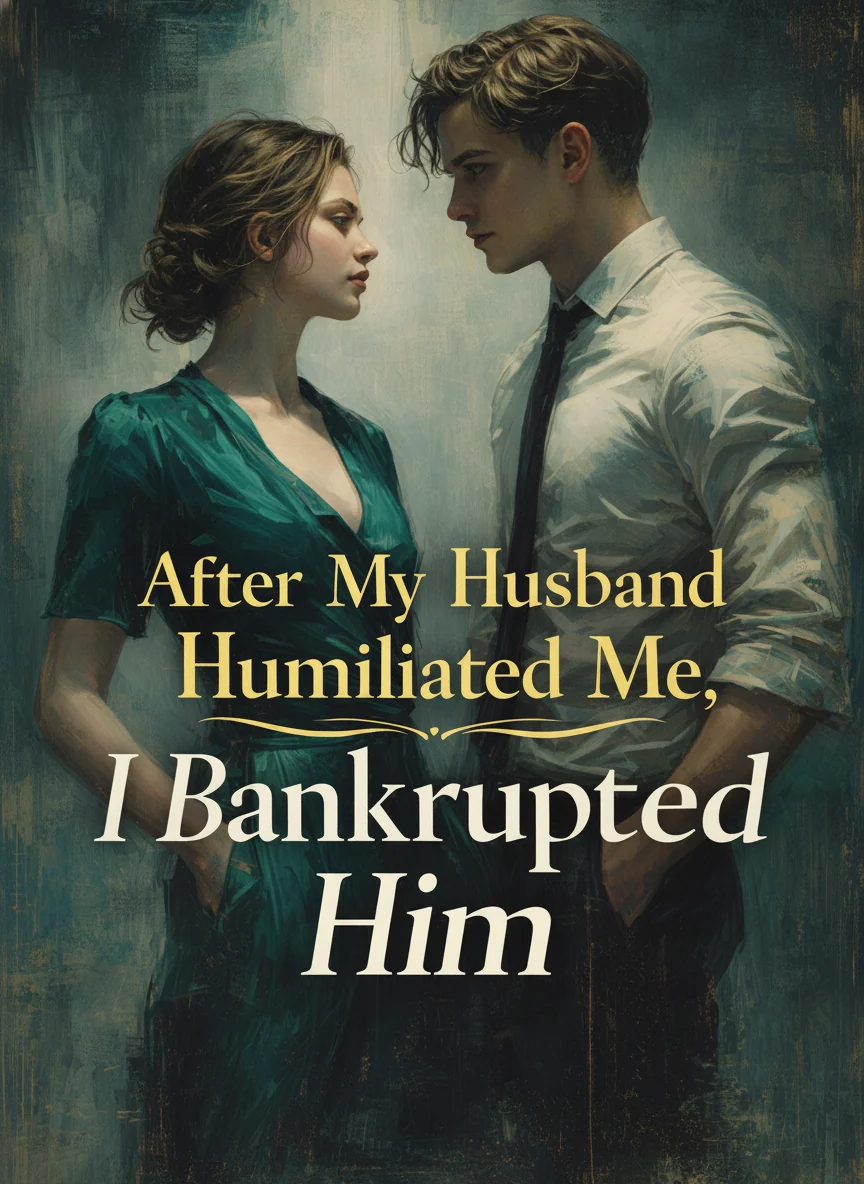
After My Husband Humiliated Me, I Bankrupted Him
Chapter 3
Viktor found me at the coat check.
I was pulling on my wrap, fingers still a little unsteady, when I heard his footsteps behind me. Unhurried. Deliberate. I turned.
He didn't say anything about Grant. He didn't have to. He just looked at me for a moment with those sharp blue eyes, like he was reading something written in a language most people had forgotten.
Then he reached into his jacket pocket and held out a card. Cream stock. Simple font. Just his name and an email address.
"The work of someone who truly understands mechanisms should never go unnamed," he said quietly. "If you ever wish to correspond."
I took it. Closed my hand around it.
"Thank you," I said. Two words. They weren't enough, but they were all I had that wouldn't crack.
He nodded once, like we'd settled something between us, and walked back into the party. I stood there for another second, the card pressed into my palm, and then I went home.
—
The workshop was dark when I got back. I didn't turn on the overhead light. Just the lamp on the bench, the same yellow circle I'd worked inside for eleven months.
Grant's grandfather's pocket watch sat on the velvet cloth where I'd left it that morning. Case open. Movement exposed. The escapement catching the light in tiny, even flashes.
I sat down, wound the crown slowly, and held it up to my ear.
The sound was perfect.
Not almost perfect. Not good enough. Perfect—a clean, measured tick with no flutter, no drag, no hesitation. The kind of sound a movement makes when every part has found its right relationship to every other part. I'd memorized the frequency weeks ago, the way you memorize a word in another language until it stops sounding foreign. Now it just sounded like the truth.
I set it down and opened my leather notebook to the last section. Forty-seven pages on this one watch. Sketches of the mainspring in cross-section, notes on the jewel replacements, three different attempts at the beat error calculation before I got it right. My handwriting got smaller toward the end, more compressed, like I was trying to fit everything I knew into a space that kept shrinking.
I traced the final diagram with my fingertip. The balance wheel, the pallet fork, the escape wheel. Everything turning, everything dependent, everything in its place.
I closed the notebook.
Then I took the square of leather—the same kind my father used to wrap his most important documents, soft brown, worn at the corners—and I folded it around the watch the way you'd wrap something you intended to keep safe for a long time. I tied it with the cord. Set it in the center of the bench under the lamp.
Two seconds per day. Museum-grade. Done.
I didn't feel triumphant. I felt finished. There's a difference.
—
Reign's office smelled like coffee and paper. He had the legal pad out before I'd even sat down, pen already in hand, like he'd been thinking about this since the last time I left.
I spread the documents across his desk in order. The original licensing agreement—my father's signature at the bottom, slightly cramped, the way he always signed when he was nervous. The termination clause on page seven, the expiration date circled in pencil by an IP attorney I'd seen six months ago. Payne Technologies' current patent filings, pulled from public record. Three years of their annual revenue reports.
Reign didn't touch anything yet. He just read.
Then he picked up his pen and started mapping it on the legal pad. Dates in one column, revenue figures in another. He drew a single horizontal line and wrote two numbers on either side of it: the date the license expired, and the date Payne Technologies filed their most recent dependent patent.
The gap between them was eighteen months.
He tapped the number at the bottom of the revenue column. Then he looked up.
"Three hundred and forty million," he said. Quiet. Flat. Like he was reading a weather report. "That's the unauthorized commercial use exposure under current statute. Before we get to injunctive relief or licensing back-payments."
I held his gaze. My left hand found my right wrist under the table, pressed once, and let go.
"And the core algorithm," I said. "If we pull the license entirely."
He set the pen down. "Then Payne Technologies can't operate. Not legally. Not at scale." He paused. "You understand what you're holding."
"I do."
He was quiet for a moment. Outside, a truck moved past on the street below, the sound rising and fading.
"When you're ready," he said, "I'll take the case."
No conditions. No qualifications. Just yes.
I gathered the documents back into the leather folder, edge by edge, the way my father taught me to handle anything that mattered.
"I'll be ready soon," I said.
Grant's birthday was in three weeks.
You may also like